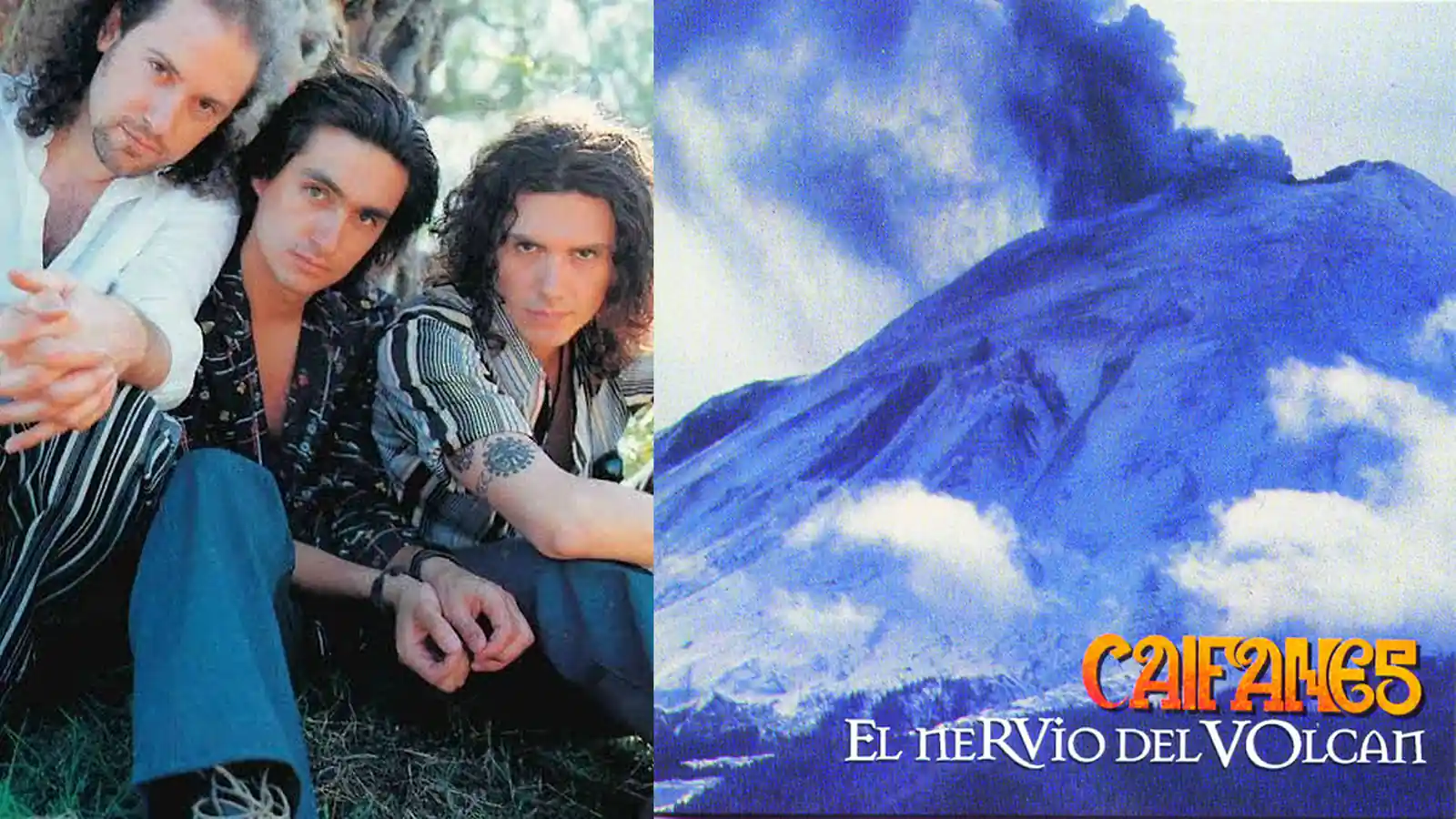

On June 29, 1994, Caifanes released El nervio del volcán, their fourth and final studio album: a dark, ritualistic and deeply Mexican record that took the band to its highest point right before it split up.
Caifanes is one of the foundational bands of Mexican rock. It was born in Mexico City in the late eighties around Saúl Hernández, alongside Alfonso André, Sabo Romo and Diego Herrera, and its first records clearly show the influence of The Cure: dark atmospheres, melancholy and a gothic air, but with an identity all their own. Later Alejandro Marcovich joined on guitar, and his textured style completely changed the band’s sound. For me, El nervio del volcán is the moment when everything comes together: the best production of their catalog, the most inspired guitars and lyrics full of mystery.
What can we hear?
Who Caifanes are and why they matter
Before Caifanes, Saúl Hernández, Alfonso André and Alejandro Marcovich had already played together in Las Insólitas Imágenes de Aurora, in 1984. Caifanes was born shortly after with a different lineup, signed with RCA and released their first three records: Caifanes (1988), El Diablito (1990) and El Silencio (1992). They remain one of the pillars of rock en español.
The best production of their career
After three albums, Caifanes traveled to Burbank, California, and recorded between February and April 1994 at O'Henry Sound Studios. There they worked with producer Greg Ladanyi, known for his work with Toto, Fleetwood Mac and The Church, who co-produced the album with the band members themselves. The result is Caifanes’ best-produced record compared with their earlier albums: every instrument has its space, the guitars breathe and Saúl’s voice always stays up front. According to GRAMMY.com, it is a more rounded, more integrated album than the previous ones, largely thanks to the freedom Marcovich had to arrange the songs.
There were also special guests: Graham Nash played harmonica on “Pero nunca me caí”, Jerry Hey, famous for his work on Michael Jackson’s Thriller, played trumpet on “Quisiera ser alcohol”, and Jerry Goodman played electric violin on “El animal” and “Pero nunca me caí”.
A record without two founding members
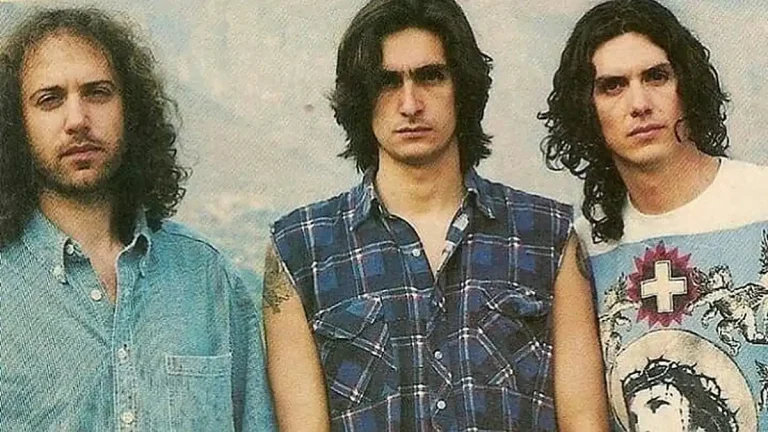
Sabo Romo and Diego Herrera had already left the group, so the album was left in the hands of a trio: Saúl Hernández (vocals and lyrics), Alejandro Marcovich (guitars) and Alfonso André (drums and percussion). Federico Fong, of La Barranca, joined on bass and Yann Zaragoza, of Mano Negra, on keyboards, and Cecilia Toussaint contributed backing vocals. The result is an 11-song record of almost 47 minutes that was certified double platinum plus gold in Mexico.
The songs you can’t miss
Afuera
The album opens with one of the most emblematic starts in national rock. Its guitar riff, with a pre-Hispanic and Latin American air, and a solo with an almost ritual tone make it one of the band’s best openers. It was the first single, released in May 1994.
Miedo
Here the new wave of Caifanes’ early years shows up fully mastered, with a dark atmosphere and a guitar in the lead role. Marcovich uses an EBow on this track, the device that makes a string vibrate continuously, which produces those long notes that feel like a lament.
Aquí no es así
It works as the formula of the record: a powerful voice over a bright guitar. It was the second single, in October 1994.
Ayer me dijo un ave
At 3:29 and with a melancholic air, it is one of the saddest and most beautiful moments of the album. It was the third single, in February 1995.
Aviéntame
One of the most remembered songs on the record, it mixes Caribbean rhythms with an unmistakable Marcovich guitar riff that sticks with you from the first listen.
El animal
The heaviest part of the album: flashes of metal and an electric violin by Jerry Goodman.
Quisiera ser alcohol
The second big melancholic pause of the record. At 5:09, it adds Stuart Hamm’s fretless bass and Jerry Hey’s trumpet. Together with “Ayer me dijo un ave” it gives the album a lot of balance, because it lowers the intensity right when the record needs it.
La Llorona
It closes the record at 5:10 and is the band’s own take on the figure from Mexican culture, with a touch of son huasteco and a somber tone. Marcovich uses the EBow again, and his guitar almost seems to speak, as if it were the voice of La Llorona herself.
For a slow listen
It is worth paying attention to “Hasta que dejes de respirar” and “El año del dragón”, two less obvious cuts that were not singles. They are songs that ask for several listens, but they show how far the band went on this record.
A trio with chemistry and a guitar that speaks
Alejandro Marcovich
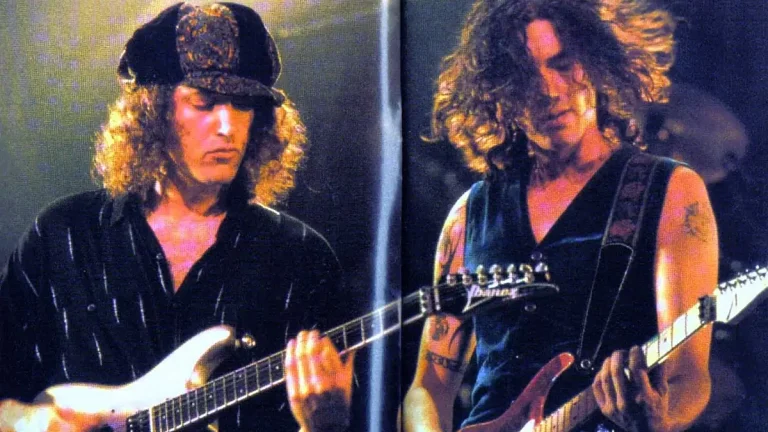
This is Marcovich’s great album as a guitarist. His way of imprinting the guitar is exquisite: characteristic riffs on “Afuera”, “Miedo”, “Aviéntame” and “La Llorona”, EBow textures, arrangements that break with the expected and a variety of tones that goes from ethereal to aggressive. It was also the last record this lineup made before the breakup. For me, without him Caifanes would not be the same.
Saúl Hernández
Voice, lyrics and soul of the group. Saúl has a knack for writing verses that work on their own and often turns to figures from Mexican culture, without losing the dark and poetic side that defines the band.
Alfonso André
Drums and percussion. His work gives movement to a record that combines rock, Caribbean rhythms and touches of son huasteco.
The Mexican and pre-Hispanic touch
I love the Mexican and pre-Hispanic touch that Caifanes always had in its concept, and here it shows more than ever: the riff of “Afuera” with its ancestral air, the legend of “La Llorona” and a title that speaks of the force that beats inside the earth.
A farewell that hurts
It was Caifanes’ last album. After its release, the band split after the final concert on August 18, 1995 in San Luis Potosí. The relationship between Saúl and Marcovich had become strained, and Marcovich himself has said he left over creative differences, because he did not agree with Saúl’s leadership and direction. On top of that came a legal dispute over the Caifanes name, which led Saúl to continue with Jaguares. Years later they reconciled, after it became known that Marcovich needed surgery for a brain tumor, and in 2011 the band reunited.
It is a shame they split at that point, because I particularly think this lineup could still have made many more iconic albums that would keep placing Mexican rock on the world map. If you want to keep exploring, check out the guitar atmospheres of The Joshua Tree and of Carnaval de Luz, both by U2, or the punch of Pantera’s Far Beyond Driven, which came out that same year, 1994. For more context, you can read the album’s Wikipedia page, the GRAMMY.com article for its 30th anniversary and the Sopitas recommendation.