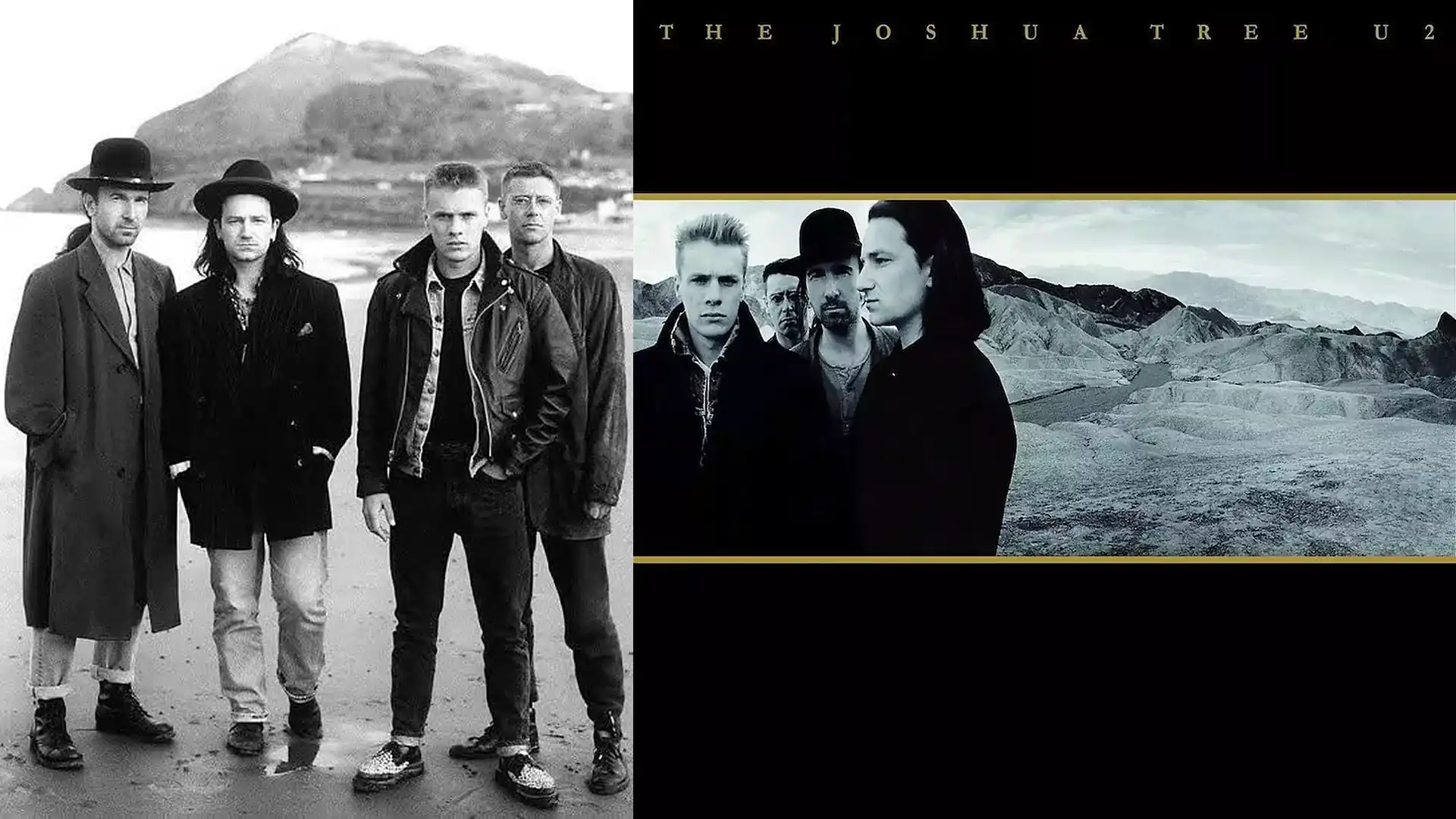


On March 9, 1987, U2 released The Joshua Tree, their fifth studio album: the record where four musicians from Dublin stopped being a big band and became the biggest in the world, with songs that sounded like stadiums and deserts at the same time.
They were coming off The Unforgettable Fire and a Live Aid that had put them in front of the whole planet. For the next step they called Brian Eno and Daniel Lanois again, but with a new goal: more direct, harder songs with traditional structures, without losing the atmosphere. Eno had already worked with David Bowie on Low, and that blend of rock and sonic landscape is exactly what would end up defining the album. In the same year the world was hearing Appetite for Destruction, U2 was building a different kind of rock: spiritual, political and huge.
What can we hear?
Borrowed houses, a room with echo and a band playing together
The sessions ran from January 1986 to January 1987 and did not happen in a single studio. Much of the album was recorded at Danesmoate House, a mansion near Dublin whose very high ceiling and wooden floors gave the drums their enormous size; Adam Clayton summed it up by saying the big drum sound on the album is the sound of that room, and he later ended up buying the house. Work also took place at Melbeach, The Edge’s home in Monkstown, and at Windmill Lane, with Mark “Flood” Ellis as engineer and Eno and Lanois alternating in shifts of a week or two.
One detail explains why it sounds so unified: unlike the previous album, almost every song was recorded live, with everyone playing together, with only a couple of exceptions. That collective breathing is what you hear from the very first second.
A year of grief
Midway through the sessions, in 1986, Greg Carroll died. He was a Maori man from New Zealand who worked with the band and had become part of their inner circle. U2 traveled to New Zealand for his funeral and returned to Windmill Lane on August 1, 1986 in a different frame of mind. “One Tree Hill” takes its name from the Auckland hill where Carroll took Bono, and it is the album’s tribute to his memory.
The desert on the cover
The imagery is by Anton Corbijn, who traveled with the band through the Mojave Desert. The cover photo was taken at Zabriskie Point in Death Valley; the tree that gives the album its name appears in other photos from the shoot, because they put the group in the landscape and felt that showing the tree on the front would be too literal.
The songs you cannot miss
Where the Streets Have No Name
The album opens with one of the most famous entrances in rock. “Where the Streets Have No Name” began as a demo by The Edge and became a studio monster: according to the Classic Albums documentary, it consumed an enormous share of the time of the entire sessions, and the story goes that Eno even proposed erasing the whole recording and starting over. Even so, the result is an anthem of shimmering guitars, constant pulse and a crescendo that still lifts stadiums.
Anthems and wounds
“I Still Haven’t Found What I’m Looking For” and “With or Without You” were the two singles that reached number one in the United States; the second, with a guitar that seems not to play but to breathe. “Bullet the Blue Sky” is the political punch: a hard, almost violent rock song aimed at American foreign policy in Central America and El Salvador. Then comes the most intimate stretch: “Running to Stand Still”, “Red Hill Mining Town”, “In God’s Country” and the electric blues of “Trip Through Your Wires”. The closing pair, “Exit” and “Mothers of the Disappeared”, dims the lights until it is almost silent.
Every member, a contribution and a united band
Four pieces that fit
Bono (vocals). He wrote the lyrics and found his most open voice here, one that looks toward America while asking questions about faith and injustice.
Adam Clayton (bass). He contributes firm, melodic lines that hold up songs like “With or Without You” and “Where the Streets Have No Name” without getting in anyone’s way.
Larry Mullen Jr. (drums). He sets a dry, constant pulse, the engine of every song, and the room at Danesmoate did the rest.
The Edge (guitar, keyboards and vocals). He is the great sonic architect of the album. His way of using delay as a rhythmic instrument, letting notes repeat and pile up, created a language that many guitarists would imitate afterward. The album credits even include the Infinite Guitar, an invention of Michael Brook that The Edge explored to get notes that seem never to end. He is one of the modern masters of the guitar and of effects design: he does not play more notes, he plays the ones that are needed and turns them into landscape. If the eighties had another guitarist whose sound you recognized from the first note, it was Mark Knopfler on Love Over Gold; The Edge took that idea to a different territory.
A band that stays together
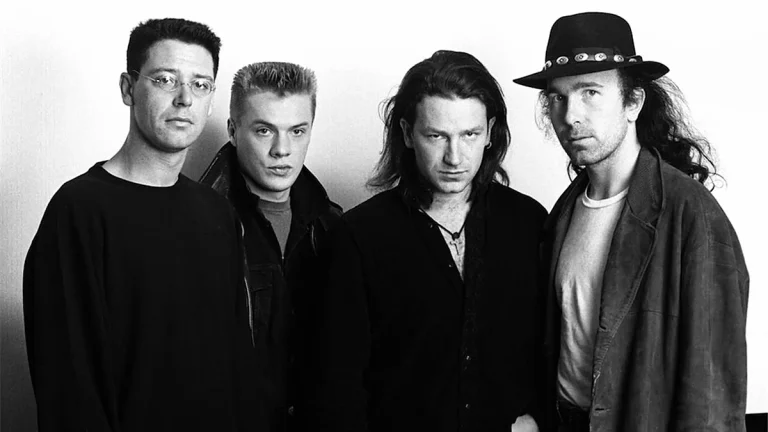
What is most impressive about The Joshua Tree, and about U2 in general, is that the four on the record are the same ones who started in Dublin in 1976. For a band to stay together this long without lineup changes is very rare in rock, and here you can hear it: the instruments sound like a single voice, nobody competes with anybody and everyone knows when to step back. That trust, forged since adolescence, is what lets the album sound enormous without ever sounding less than human.
A stadium legacy
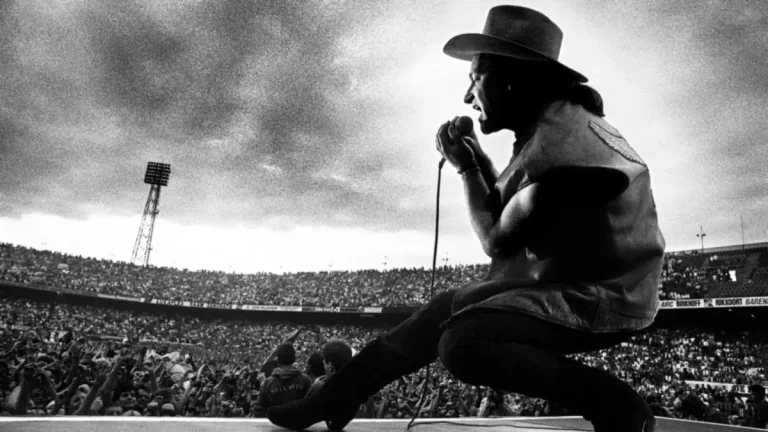
The Joshua Tree was U2’s first number one in the United States, won the Grammy for Album of the Year and approached 25 million copies sold. Its tour was the first to take the band into stadiums, and in 2017 they played the album in full again. Almost two decades later, on How to Dismantle an Atomic Bomb, the band showed they were still the same band, but this is the record where everything clicked. More information on Wikipedia and in this Rolling Stone feature.