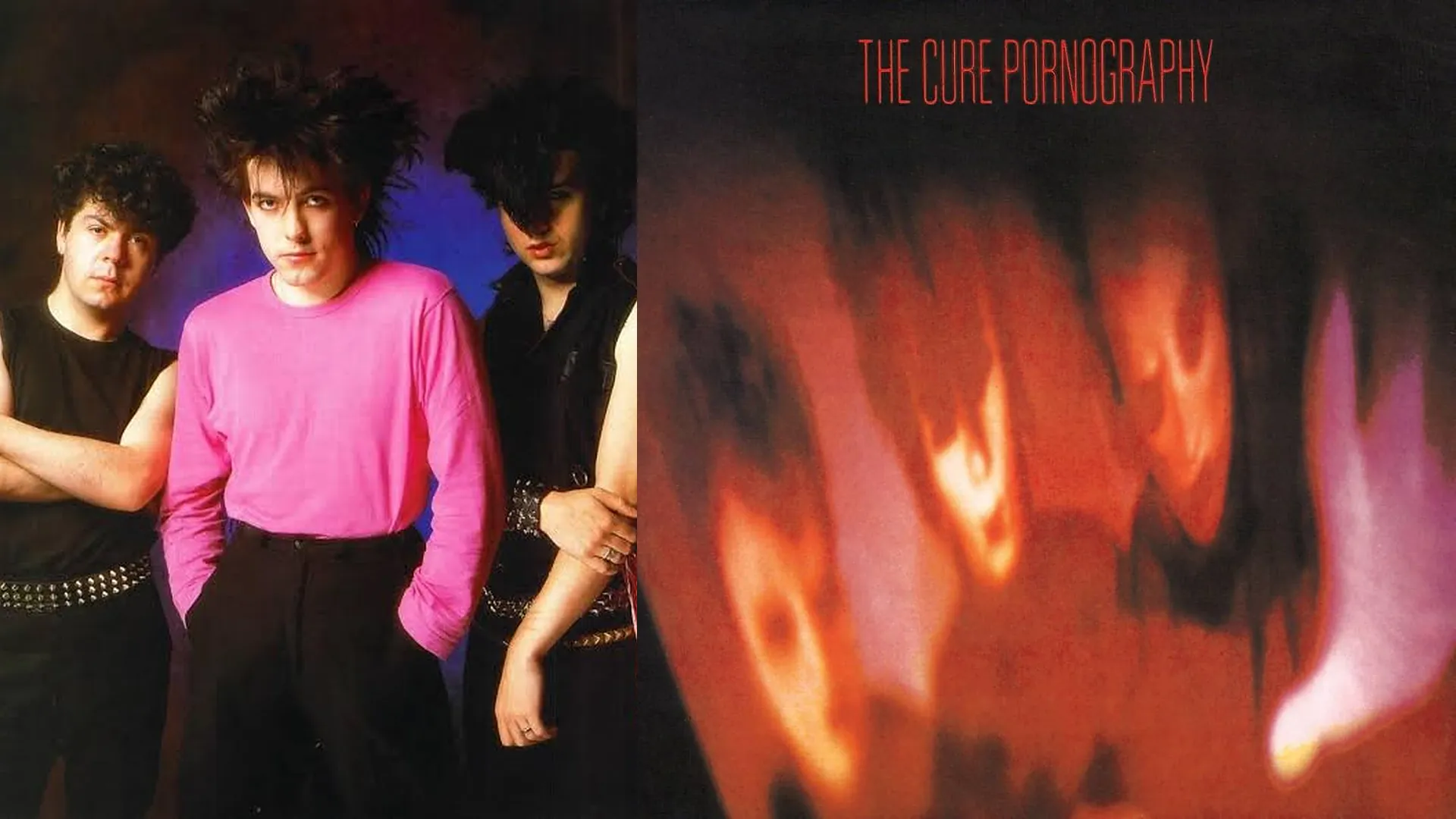


In May 1982, The Cure released Pornography, the album that closed their dark trilogy and that Robert Smith came to believe would be the band’s last: eight songs, about 43 minutes and one of the bleakest, most suffocating records rock has ever produced.
It is a very dark album, and in every bar you can feel the mood of the moment the band was going through: addictions, conflicts, exhaustion and a depression that covers everything. There are no concessions and no breathing room; it is a dense, claustrophobic experience that asks to be heard in full and with the lights low. Received coldly by critics on release, over the years it has come to be considered one of the foundational stones of gothic rock.
What can we hear?
A band at its limit
By early 1982, The Cure were coming off an exhausting run of touring, around 200 shows a year, and Robert Smith was worn out, depressed and hit by personal losses. Years later he said he had every intention of signing off. After Seventeen Seconds (1980) and Faith (1981), Pornography closes the group’s so-called gloom trilogy. Smith himself has explained that the choice was between giving in completely or making a record about that state, and that he channelled everything self-destructive in his personality into making something out of it.
The sessions at RAK Studios
The album was recorded between January and April 1982 at RAK Studios in London, with Phil Thornalley, who had worked as an engineer on The Psychedelic Furs’ Talk Talk Talk, and the band itself producing. The sessions were marked by heavy drinking and drug use, including LSD. According to the accounts, the band slept in the label’s offices to save money, a pile of empty bottles built up in a corner of the studio, and they even built a sculpture out of beer cans that the cleaning staff were forbidden to touch. Musically, Lol Tolhurst’s drums were recorded with the room’s acoustic panels removed, which gave them that huge, open sound. On top of it all, the relationship between Smith and Simon Gallup kept deteriorating throughout the process.
A title that caused discomfort
The name did not go down well at Polydor, the parent company of the Fiction label, which considered it potentially offensive. The sleeve, designed by Ben Kelly, shows blurred faces in reddish tones that seem to melt, an image that fits the contents perfectly. It was also the time when Smith adopted the smeared-lipstick look that became part of the band’s gothic image.

The songs you can’t miss
One Hundred Years · 6:39
It opens the record with Tolhurst’s militaristic drumming, Gallup’s ominous bass and Smith’s wailing guitar, at a slow tempo that sets the tone for the whole album. The lyrics’ imagery feels like a nightmare, or a portrait of many nightmares at once. It is one of the two songs on the record with real momentum.
A Short Term Effect · 4:22
It keeps up the apocalyptic atmosphere and the relentless tension. Some read its title as a reference to mortal life itself, and it is a good clue to what is coming: a record that looks death straight in the face.
The Hanging Garden · 4:32
Along with the opener, it is one of the few songs with real drive, and it was the album’s single, released in July 1982. It made the UK top 40 and landed on John Peel’s Festive Fifty. For me, it is the clearest way into this universe.
Siamese Twins · 5:28
It closes the first side talking about relationships rotting into bitterness and estrangement. And it is not even the bleakest song on the record, which says a lot about what comes after.
The Figurehead · 6:14
The martial drumming returns, but now extremely slow, with a funereal, grey, almost totalitarian feel. It conveys an emotional disconnection that grows bar after bar, and it is one of the pieces that stay with you most.
A Strange Day · 5:04
A nightmare with echoes of Greek mythology and the feeling that everything is ending. Some consider it the best song on the album, and it is easy to see why.
Cold · 4:26
It starts with a six-note riff that Smith plays on cello, joined by organ and keyboards. The result is an icy sound, the kind that gives you goosebumps, that lives up to its title.
Pornography · 6:27
The closer and the title track. Distorted voices give way to militaristic drumming that brings the album full circle to its opening. On this piece the band and Thornalley used spoken fragments from a television documentary about sex, a technique close to early sampling. It is among the bleakest things ever recorded.
From the abyss to legend
Three musicians, one blow
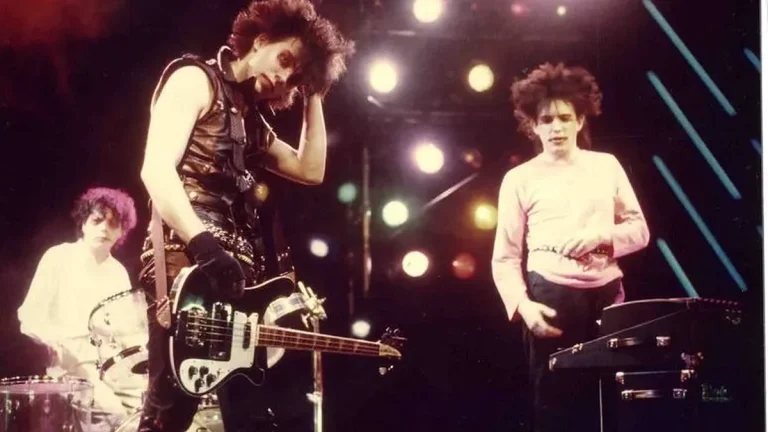
The album is credited to Robert Smith (vocals, guitar and keyboards), Simon Gallup (bass and keyboards) and Lol Tolhurst (drums and keyboards). It was Tolhurst’s last album as the band’s drummer, since he moved to keyboards afterwards, and the first Cure record on which he played them. Years later he said it is his favourite Cure album and that he would not change a thing.
The end of an era
The European tour that followed was a nightmare. Smith and Gallup fought after a show in Strasbourg and both went back to England; the final show was in Brussels on 11 June 1982, and Tolhurst came to think it was the end of the band. Gallup left and formed Fools Dance, and Smith rebuilt The Cure with a much brighter sound, with which the group would later fill stadiums again with albums such as Wish (1992).
From rejection to reverence
Despite the bad reviews at the time, the record reached number 8 on the UK chart, the band’s biggest success until then. Rolling Stone compared it to a toothache, but over time the verdict has changed completely: Uncut has called it a masterpiece of claustrophobic self-loathing, NME ranked it sixth among its 50 darkest albums and described it as arguably the album that invented goth, and it also appears on lists by Slant and Mojo.
An influence that lives on
Bands such as Deftones and System of a Down have cited it as a reference; if you want to hear that legacy in alternative metal, check out our review of Around The Fur. The full album has been covered by Damnation A.D. (2017) and Leaether Strip (2024), and Xiu Xiu with Chelsea Wolfe recorded their own version of One Hundred Years in 2021.
Keep listening
If you are after another album born from pain and addiction, Dirt by Alice In Chains is a must-stop. And if depressive moods and cold textures are your thing, Low by David Bowie is the ideal companion.
Read more
You can dig deeper in the album entry on Wikipedia, in the story of how it was made at uDiscover Music and in the look back from Far Out Magazine.