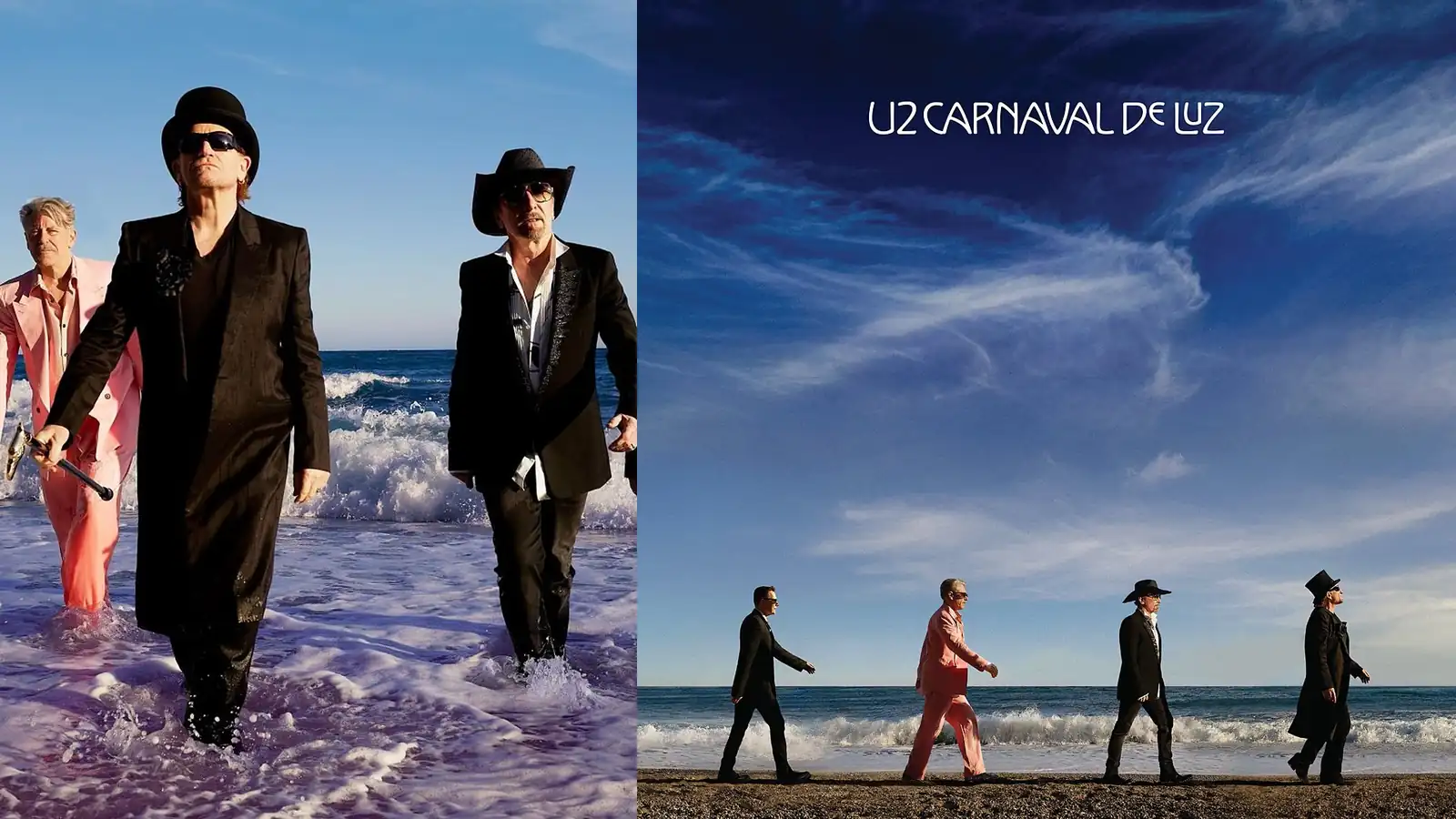


On November 13, 2026, U2 released Carnaval de Luz, their sixteenth studio album and the first with new material in nine years: a luminous, atmospheric record full of life, with which the band reaches its 50th year sounding united and still eager to tell us things.
Nearly a decade passed after Songs of Experience in 2017, and 2026 was the year U2 caught up: two surprise EPs, Days of Ash in February and Easter Lily in April, which followed the liturgical calendar of Lent, and now this album, conceived as a joyful celebration of life. It is produced by Jacknife Lee, with Brian Eno contributing co-writing and synthesizers. For the one writing this, it is probably the record we have liked most from the band since How to Dismantle an Atomic Bomb.
What can we hear?
Half a century, the same four and top-quality production
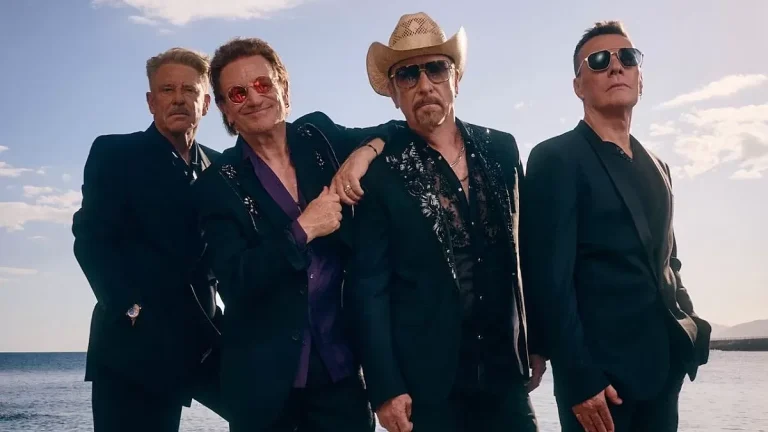
The first thing that stands out about Carnaval de Luz is what it means: Bono, The Edge, Adam Clayton and Larry Mullen Jr. are still the same four who started in Dublin in 1976, and at 50 they deliver production of the finest quality, polished down to the last detail, that gives us goosebumps with everything it conveys. For a band to get this far without changing its lineup and still sound this moved is a rarity in rock. Almost four decades ago they already showed it on The Joshua Tree, and here that unity can be felt again: nobody competes with anybody.
A synth pop opening and a mix of contrasts
The album opens with “Go (Carnaval De Luz)”, a track of barely two and a half minutes that, with its minimalist synth pop, recalls the album Pop; some reviews describe it instead as science-fiction punk, but Eno’s synthesizers are there from the start. Throughout the record the mix plays with extremes: it can be very dry and direct, like the opening of “Glorify”, and suddenly open up into something rich and atmospheric, as on “Street of Dreams”.
A record with Spanish phrases and a video shot in Mexico
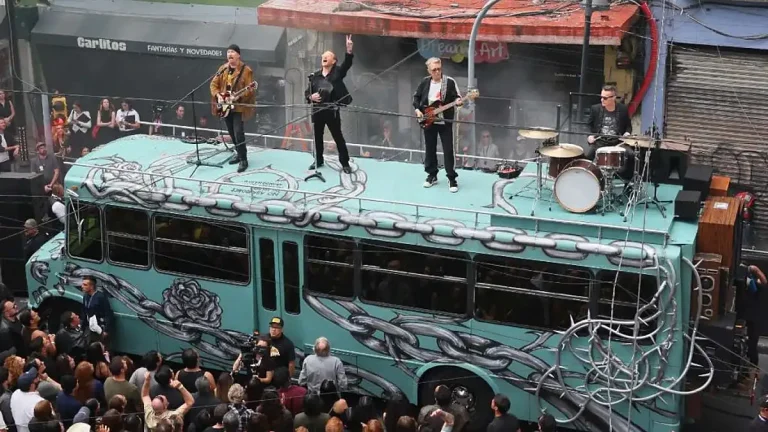
The title itself is in Spanish, and the band included phrases in our language and songs such as “Silencio” and “La Reina”. “Silencio”, besides, reminds us a bit of “Vertigo”, the single that opened by counting in Spanish. And the link with Mexico is real: the video for “Street of Dreams” was filmed in Mexico City on May 12, 2026, with the four playing on top of a school bus decorated with graffiti by Mexican artist Chavis Mármol, near Plaza de Santo Domingo, in front of a crowd that gathered to watch. The Greatest Show on Earth tour will also kick off in Mexico City on February 23, 2027, with Beck as support.
The perfect runtime and the deluxe edition
Carnaval de Luz runs about 47 minutes and 12 songs, and that length is perfect: nothing is wasted and it never drags, it plays from start to finish like a single journey. However, streaming platforms also list the Deluxe edition, which brings 24 songs and 1 hour 43 minutes. The 12 extra songs are those from the two EPs the band released earlier in 2026, Days of Ash and Easter Lily, so the Deluxe gathers U2’s whole year in one place. There is also a digital version with one extra track, “Get Back to Now”. The player in this post is the standard 12-song version, which for us is the record as it should be heard; the EPs are best enjoyed afterwards, as a complement.
The songs you cannot miss
The Greatest Show on Earth
The third single arrives eight songs in, and it is the emotional heart. Here The Edge sounds like his greatest hits: that guitar with his trademark tone and that delay so completely his own, an intro that starts like a Joshua Tree single before the echoes shift out of phase, with Eno’s synthesizers behind it. The video was directed by Anton Corbijn, the same photographer behind the cover of that 1987 album.
Torn, with Dolly Parton
The album closes with “Torn”, a duet between Bono and Dolly Parton. She recorded her vocal in Nashville in June 2026, and it was her last recorded vocal performance: she passed away on August 25, at 80. The song, written by U2, Parton and Johnny McDaid and produced by Jacknife Lee, with Daniel Lanois on pedal steel, is about broken family ties. It is the sentimental side of the record and invites us to value our families and always keep love, respect and unity.
A message of peace
Among the most political tracks is “If the World Is at War We Better Not Be”, barely two and a half minutes long, and we believe that is where Bono’s touch is strongest: a message of peace that does not forget people. It should be said that Rolling Stone also reads it as a couple’s song, as an effort to save a relationship, and perhaps that double reading is part of its strength. Around it are “Superficiality”, “The Mirror Maker (Rosalía)”, “Midnight Sunshine” and “Can’t Stop Us Now”, which complete the carnival.
Every member, a contribution and a united band
Four pieces, one band
Bono (vocals). His voice does not age: it sounds with the same strength and emotion as ever, and he sounds fully committed, both in the duet with Dolly Parton and in the messages of peace and hope.
The Edge (guitar, keyboards and vocals). He is one of our guitar heroes and one of the masters of delay and effects design: the echo that builds up and becomes landscape, a signature recognizable from the first note. On this record you can hear a rich variety of tones, from the crystalline chime that opens “The Mirror Maker (Rosalía)” to the fuzzed-up crunch that shatters everything, and that reflects the diversity of guitars he handles: he does not pigeonhole himself with any single one. His usual arsenal runs from the 1976 Gibson Explorer, through the Fender Stratocaster and the Epiphone Casino, to the Gretsch he picks up when playing slide, among others. Each guitar changes the character and color of the sound, and here he returns to his best form. His voice also comes through very well on this record, for example on “Street of Dreams”, where he shares a joyful chorus with Bono.
Adam Clayton (bass). He is one of the great protagonists of the record and, with the look of this era, he seems rejuvenated. His bass lines shine on “The Mirror Maker (Rosalía)”, where the press highlights a line that sticks in your head, and on “Can’t Stop Us Now”, where his bass and Larry’s drums push the song forward before The Edge comes in. Also, on “La Reina” the bass stabs and undulates.
Larry Mullen Jr. (drums). His drumming is a delight: he knows exactly when to shine and when to stay discreet, and he always adds to the band’s dynamic. He is the constant pulse on which everything rests, with a propulsive, almost march-like rhythm on several tracks and an off-kilter beat on “Can’t Stop Us Now” that shows U2 still love straying from the easy path.
Longevity as a virtue
Carnaval de Luz shows that U2’s longevity is not nostalgia: it is a legendary band that has matured like wine, yet has renewed itself like an immortal phoenix. The melodies on this record are gorgeous, and “Superficiality” is a good example, and all of it always comes with interesting guitar riffs, with texture, with risks and with heart. In its 50th anniversary year, U2 prefers to look forward. More information on Wikipedia, in the Rolling Stone review and in the note on “Torn”. If you liked this record, also see how Eno shaped the sound of David Bowie’s Low or how rock filled up with synthesizers on ZZ Top’s Eliminator.