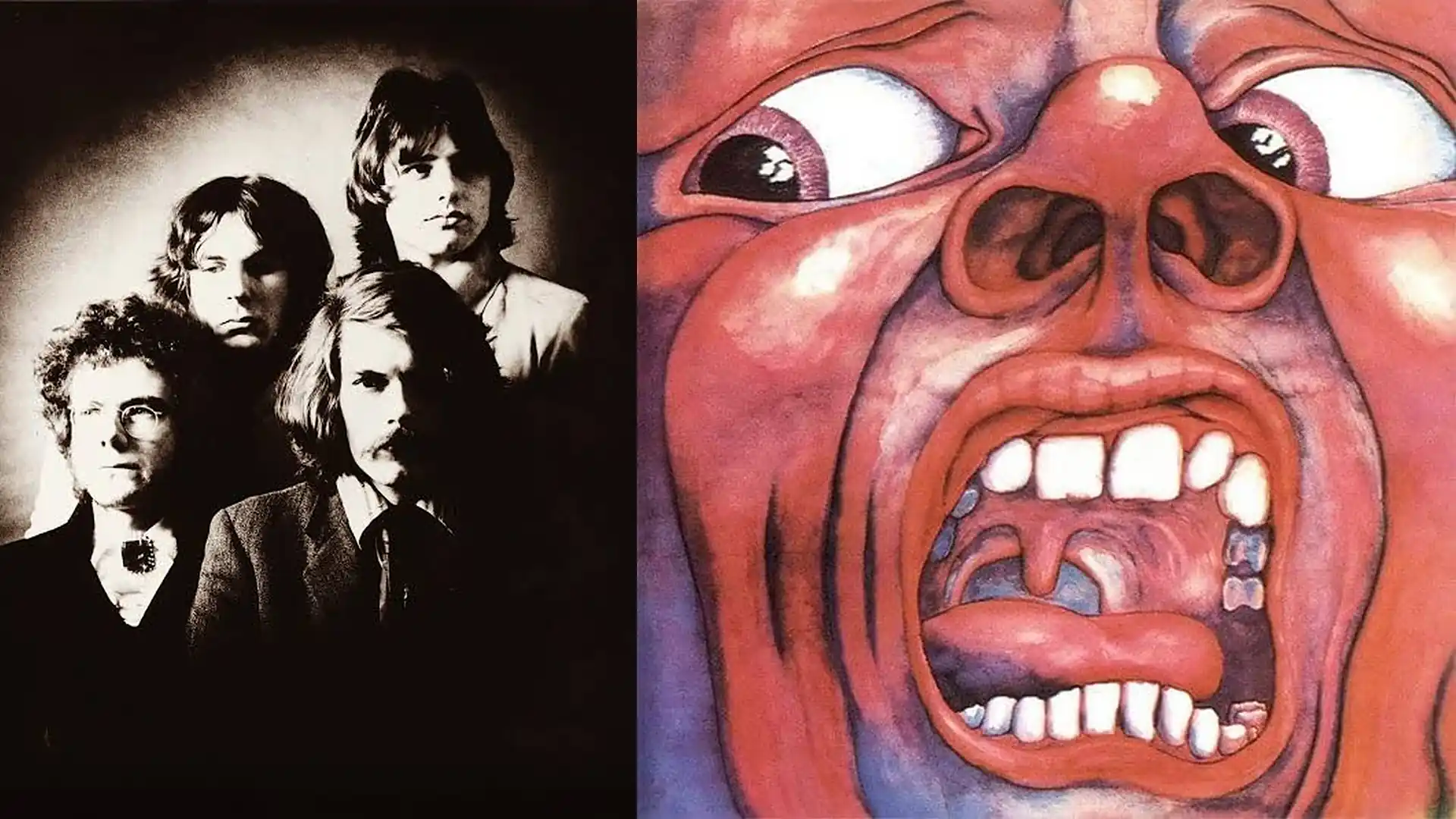


On October 10, 1969, King Crimson released In the Court of the Crimson King, a debut that sounded like something that did not exist yet: five songs, almost 44 minutes and a blend of rock, jazz, classical and symphonic music that gave shape to progressive rock.
It was the year of Woodstock and Abbey Road, and still this London band came out with a record with no commercial concessions: long songs, Mellotron orchestrations, saxophone and flute, a riff that almost sounds like metal and a cover nobody forgets. More than half a century later it still sounds ahead of its time, and for me it is one of those albums that feels like a discovery every time you hear it.
What can we hear?
Who King Crimson were in 1969
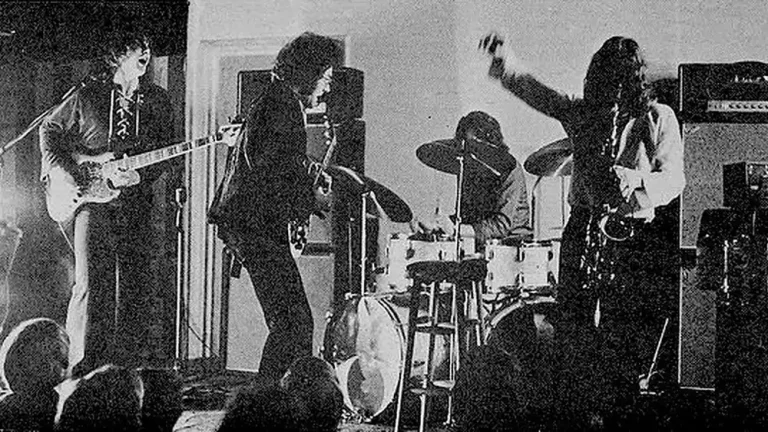
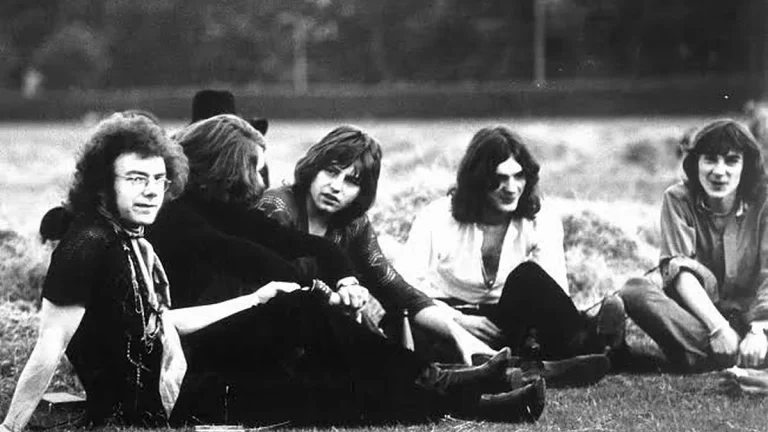
King Crimson formed in London between late 1968 and early 1969 around guitarist Robert Fripp and drummer Michael Giles, who came from the trio Giles, Giles and Fripp. They were joined by Greg Lake on bass and vocals, Ian McDonald on woodwinds and keyboards, and Peter Sinfield as lyricist. Their first official show was on April 9, 1969 at the Speakeasy in London, and in July they opened for the Rolling Stones in Hyde Park, in front of a crowd estimated in the hundreds of thousands. Only a few weeks later they were recording their debut.
An album that produced itself
The first sessions with producer Tony Clarke, known for his work with The Moody Blues, did not work out: the band felt they were not heading in the same direction. They moved to Wessex Sound Studios in London, a studio set in an old church with a bigger natural sound, and produced the record themselves, which was unusual for a debut. They recorded between July 7 and August 13, 1969 on a 1-inch eight-track recorder, with Robin Thompson as engineer and Tony Page as assistant. According to Louder Sound, they had only about half an hour of prepared material and recorded much of it live before adding layers.
The Mellotron as an orchestra
The dominant instrument of the album is the Mellotron, which McDonald overdubbed in layers alongside saxophone, flute, clarinet and vibraphone; on some tracks up to five tape generations were used to get that depth. McDonald wanted something more aggressive and majestic than what The Moody Blues got from the same instrument, so, according to Louder Sound, he ran it through a double stack of Marshall amplifiers and placed the microphone about 20 feet away. On “Epitaph” he used two Mellotron parts and shifted their volumes during the mix to bring the sustained chords to life.
The songs you can’t miss
21st Century Schizoid Man (including “Mirrors”) · 7:24
One of the most brutal openers of 1969: a distorted, fractured riff, a rampaging saxophone and a jazz rhythm section at full speed. Critic Jim DeRogatis compared it to heavy metal, and Time Out called it perhaps the first alternative anthem. It was the last song recorded for the album and, according to Louder Sound, they played it in a single take despite its complexity. Pay attention to the instrumental passage, where the whole band moves in unison at a breakneck pace.
I Talk to the Wind · 6:05
The breather after the punch. McDonald and Sinfield originally wrote it for Giles, Giles and Fripp, and it was kept to show the band’s softer side; Sinfield has said it was influenced by Joni Mitchell. McDonald’s flute makes it almost pastoral.
Epitaph · 8:47
It includes “March for No Reason” and “Tomorrow and Tomorrow”. It is one of the two orchestral pieces on the record and the most solemn: a Mellotron march, a voice that slowly rises and a Sinfield lyric full of foreboding.
Moonchild · 12:13
It includes “The Dream” and “The Illusion”. It is the most daring piece on the album: it opens as a delicate song and dissolves into a long instrumental passage that does not follow the rules of a song. A Progarchives reviewer considers it one of the hardest and most experimental pieces on the record, and that is true, but it is also the one that best shows how far the band wanted to go.
The Court of the Crimson King · 9:25
It includes “The Return of the Fire Witch” and “The Dance of the Puppets”. McDonald and Sinfield had written it for their previous group, The Creation, and it started as a country and western song before becoming this majestic closer, developed over three days. It was also the album’s single, released in two parts.
The cover
The screaming face was painted by Barry Godber, a computer programmer and friend of Sinfield, who used his own face reflected in a mirror as the model. It was his only painting: he died in February 1970, aged 24, of a heart attack, shortly after the album came out. Fripp keeps the original and has explained that the outer face is the Schizoid Man and the inner one is the Crimson King.
Five minds, one vision
Robert Fripp
Electric and acoustic guitar, and the mind pushing the band toward a darker and more intense sound. On this record his guitar does not chase easy showiness: it cuts, twists and leaves room for the Mellotron orchestra.
Ian McDonald
Woodwinds, keyboards, vibraphone, vocals and Mellotron. He is the great sonic architect of the album and co-writer of “I Talk to the Wind” and the title track.
Greg Lake
Lead vocals and bass. His deep, powerful voice gives the epic tone to “Epitaph” and the title track.
Michael Giles
Drums, percussion and timpani. According to Sinfield, he always wanted to play things as difficult and jazzy as possible, and you can hear it in every bar.
Peter Sinfield
Lyrics and “illumination”, as the record itself credits it. His verses, somewhere between medieval and apocalyptic, complete the atmosphere.
A huge legacy
It reached number 5 on the UK charts and number 28 in the United States, where it went gold. Pete Townshend of The Who called it an uncanny masterpiece, and scholar Edward Macan has considered it perhaps the most influential progressive rock album. In 2015 Rolling Stone placed it second on its list of the greatest progressive rock albums, right behind Pink Floyd’s The Dark Side of the Moon, and Pitchfork gave it 10 out of 10. Even Kanye West sampled “21st Century Schizoid Man” on “Power”, in 2010.
A lineup that lasted very little
At the end of the US tour, in mid-December 1969, the original band played its last show. McDonald and Giles, tired of touring and afraid of flying, decided to leave, and they also preferred a lighter sound than the one Fripp was pushing. Lake stayed to record the next album, In the Wake of Poseidon, and then left to form Emerson, Lake & Palmer. McDonald and Giles later made a record together, in 1971. It is a shame: this lineup recorded a single studio album and left it behind like a comet that never passed the same way again.
If you want to keep exploring the music of those years, see where British rock came from on Fresh Cream by Cream, from 1966, and how it got heavier soon after on Black Sabbath’s Master of Reality. For more context, you can read the album’s Wikipedia page, the Louder Sound feature on its recording and the story of the cover at Far Out.