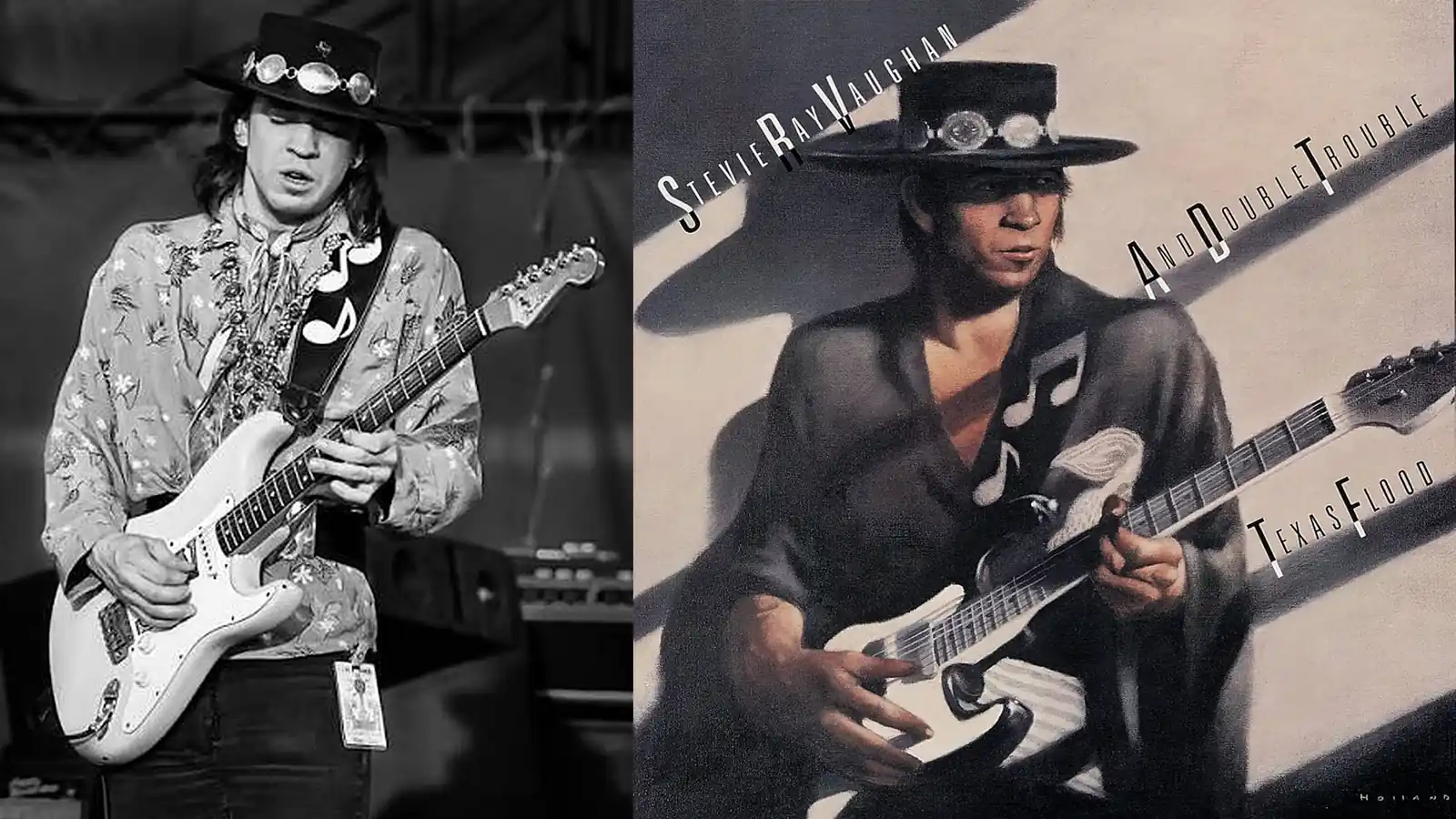


Some records arrive at the least expected moment and end up changing everything. At The Rock Review we consider Texas Flood, Stevie Ray Vaughan’s debut, the album that brought electric blues back to the front line of rock in the middle of the synthesizer era.
On June 13, 1983, Stevie Ray Vaughan and Double Trouble released their first album on Epic Records, recorded in just three days in November 1982 at Jackson Browne’s studio in Los Angeles. With Tommy Shannon on bass and Chris Layton on drums, the trio reached No. 38 on the Billboard 200 and was eventually certified double platinum in the United States.
What can we hear?
The first thing that stands out about Texas Flood is how little it cared about 1983 trends. While the charts filled up with synthesizers and drum machines, Stevie Ray Vaughan showed up with a Stratocaster, a thick tone and Texas blues played with so much energy that Jimi Hendrix and Albert King seemed to share the same phrase. If you want to trace that heritage, it is worth stopping by Are You Experienced by The Jimi Hendrix Experience and the electric blues of Fresh Cream by Cream.
The record has ten songs, six of them written by Vaughan, and mixes original material with covers of Larry Davis, Howlin’ Wolf, the Isley Brothers and Buddy Guy. Everything sounds direct, almost live, with Shannon and Layton holding the groove so the guitar has room to breathe. Producer John Hammond was also behind the project: he heard the band’s demo and got them their deal with Epic.
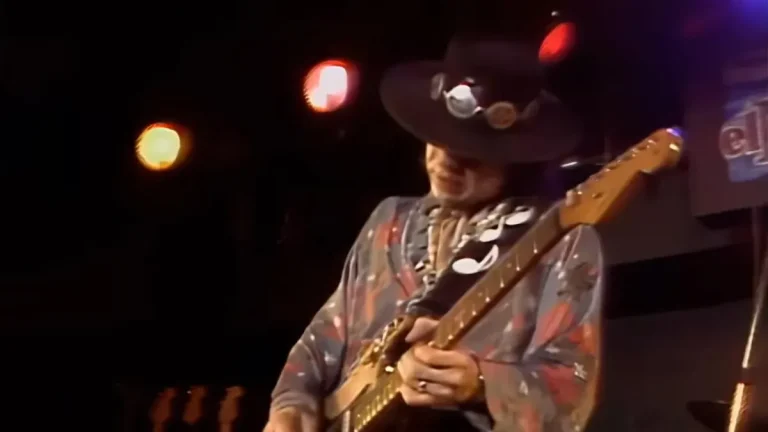
The songs you can't skip
“Pride and Joy” is the best calling card: a shuffle that reached No. 20 on Billboard’s rock chart and became Vaughan’s signature. “Texas Flood”, a version of the song Larry Davis recorded in 1958, is the emotional center of the album, with more than five minutes of guitar that hurts and comforts at the same time; it was nominated for a Grammy for Best Traditional Blues Performance. “Rude Mood” is pure instrumental vertigo, also Grammy-nominated, and “Lenny”, the closer, shows that Vaughan could whisper on the guitar as well as make it roar.
Don’t miss “Testify” either, the Isley Brothers classic turned into Texas funk, or “Dirty Pool”, co-written with Doyle Bramhall.
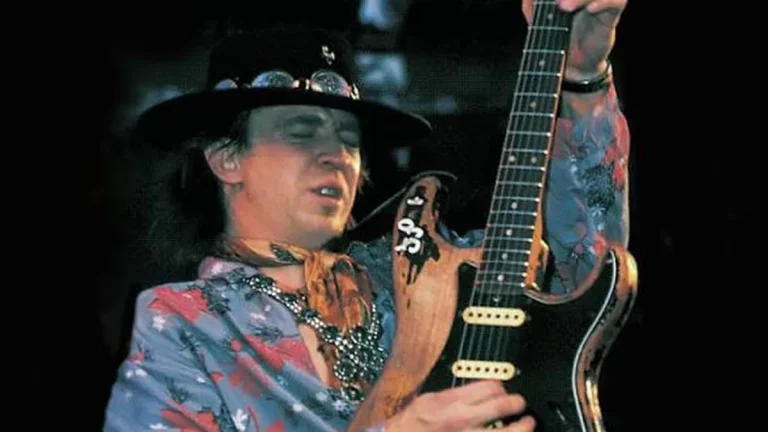
Texas Flood, a legacy that keeps ringing
Texas Flood wasn’t unanimous at the time, and some critics reproached its lack of originality, but time sided with the public: AllMusic rates it five stars, the Recording Academy inducted it into the Grammy Hall of Fame in 2021, and its influence can be heard in a whole generation of guitarists. If you are into the sound of those years and that region, Eliminator by ZZ Top, another Texas record released in 1983, is the perfect companion, and to return to the roots of blues rock you can listen to The Rolling Stones’ debut.
Vaughan died in 1990 in a helicopter crash, but his debut remains the most honest entry point to his guitar. You can find more about the album on Wikipedia and learn more about the guitarist in his biography.