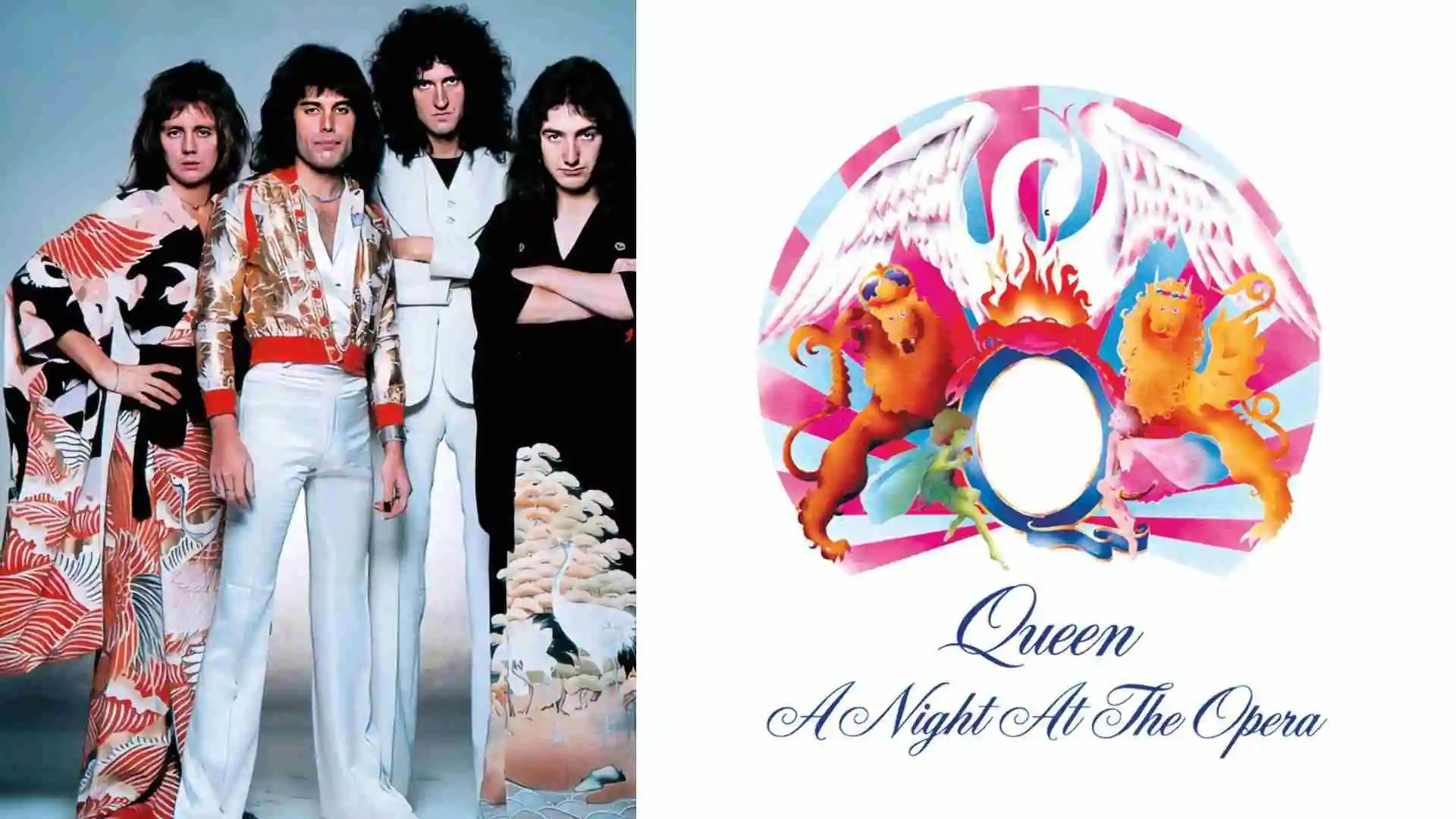
In 1975, rock was still figuring out what it could become. Punk was just starting to simmer, metal was finding its identity, and prog rock was caught somewhere between brilliance and ego. In the middle of all that, Queen did the unthinkable: they released an album where rock became opera, vaudeville, baroque, satire, glam and raw emotion.
A Night at the Opera isn’t just one of the best albums of the ’70s. It’s a genreless masterpiece.
Recorded during a tense period for the band (and even more so for their finances), Queen’s fourth album was the result of a gamble: either we go all in, or we disappear. The outcome was a 12-track journey where nothing sounds the same, yet everything fits. The album opens with Death on Two Legs, an elegant hate letter disguised as theatrical rock, and from there, all bets are off.
Chaos as an art form
From the folky sweetness of ’39 to the circus-like chaos of Lazing on a Sunday Afternoon, from the heavy edge of Sweet Lady to the euphoric anthem You’re My Best Friend, Queen does it all and nails it. It’s as if The Beatles, Led Zeppelin, David Bowie, and Monty Python decided to make an album together… but only Freddie, Brian, Roger, and John could pull it off with this level of precision.
Bohemian Rhapsody: the center of Queen’s universe
And of course, there’s Bohemian Rhapsody a six-minute experiment that no one wanted on the radio, yet ended up redefining the concept of a “hit song”. Ballad, opera, hard rock, drama, redemption.
“Is this the real life? Is this just fantasy?”
Yes. It’s both.
Long before TikTok and viral hype, this song already lived rent-free in millions of minds. Its impact is so far-reaching that it’s been honored by Panic! At the Disco, covered by Muse, parodied in Wayne’s World, and rediscovered by a new generation every decade.
Over six studios were used, with production handled by Roy Thomas Baker and the band themselves. Infinite vocal layers, guitars recorded like orchestras, lyrics that swing from sarcasm to heartbreak A Night at the Opera wasn’t an easy or fast album. It was the obsessive work of a band that believed blindly in their vision.
And that vision worked.
Queen went from an extravagant promise to a rock institution.